Monday, December 4, 2023

How the reducer used in robtics

 The reducer, also known as a gear reducer, plays a crucial role in the field of robotics. As a college student delving into robotics, understanding the functionality and significance of this mechanical component is essential. The primary purpose of a reducer is to reduce the speed of a motor's output while increasing its torque, allowing for precise and controlled movements. By employing gears, the reducer effectively converts the high-speed, low-torque input from the motor into a lower-speed, higher-torque output that is necessary for various robotic applications.


Integrating a reducer into robotic systems unveils numerous advantages, especially in terms of manipulating heavy loads and achieving precise movements. College-level knowledge in robotics entails understanding that certain robotic tasks, such as lifting heavy objects or performing delicate tasks, require increased torque. The reducer enables this force multiplication by effectively altering the motor's output characteristics, providing the necessary strength to manage heavier payloads. This enhanced torque allows robots to accomplish tasks with greater efficiency and reliability, making them indispensable in manufacturing, assembly, and even medical applications.


Moreover, the careful selection and sizing of reducers exemplify the intelligence behind utilizing them in robotics. College students exploring robotics must comprehend the intricate process of finding the ideal gear ratio. This involves considering factors such as the desired speed and torque requirements of the task at hand, as well as the limitations and specifications of the motor being utilized. An intelligent design, catered to the specific robot's needs, can significantly optimize its performance by skillfully combining reducers with motors, ensuring seamless cooperation within the system.


Furthermore, the comprehension of how reducers function within the realm of robotics extends beyond the basic mechanical aspects. College students studying robotics focus on the integration of reducers with other components, such as sensors and control systems, to bring about automation and autonomy in robots. The understanding of how to synchronize the reducer's output with the overall robotic operations allows for improved accuracy and precision. This synchronization demands an astute comprehension of robotics fundamentals, including programming and system dynamics, to seamlessly integrate the reducer's effects on torque and speed into the larger robotic framework.

In conclusion, the reducer's role in robotics cannot be understated. As college students exploring the field of robotics, recognizing and appreciating the intelligence behind its utilization is essential. Understanding the functionality, advantages, and integration of reducers within robotic systems showcases a depth of comprehension that can unlock new possibilities in this rapidly developing field. With a comprehensive understanding of reducers, college students can further enhance their knowledge of robotics, contributing to advancements in various industries and paving the way for future robotic innovations.

The structure of the planetary gear reducer

 The planetary gear reducer is a key component in various mechanical systems, providing torque amplification and speed reduction in a compact design. Its unique structure consists of several meshing gears that operate in a planetary motion around a central sun gear. This intricate arrangement allows for efficient power transmission and ensures smooth operation within a limited space.


At the heart of the planetary gear reducer is the sun gear, which is usually positioned in the center. It meshes with multiple planet gears arranged in a circular formation around it. These planet gears are connected to a carrier arm, which allows them to rotate as a group. Finally, an outer ring gear surrounds the entire assembly, completing the gear system. The teeth of the gears are precisely shaped to ensure smooth engagement and proper power transmission.


The planetary gear reducer operates through a fascinating combination of rotational and translational motion. When the input torque is applied to the sun gear, the planet gears rotate around it while also revolving around the carrier arm. This results in a combined motion called epicyclic motion. The rotation of the planet gears is constrained by the outer ring gear, which causes them to drive the output shaft in a reduced speed or amplified torque, depending on the configuration.


In conclusion, the structure of the planetary gear reducer is a sophisticated arrangement of gears that enables efficient power transmission in a compact design. Its unique configuration involving the sun gear, planet gears, carrier arm, and outer ring gear allows for a combination of rotational and translational motion. This gear system is widely used in various mechanical applications, from automotive transmissions to industrial machinery, proving its reliability and efficiency. Studying and understanding the structure of the planetary gear reducer provides valuable insights into the principles of mechanical engineering and its applications in real-world systems.

What are the application of RV reducers?

 RV reducers, also known as right angle worm gear reducers, are widely used in various applications across industries. One common application is in conveyor systems. These reducers help to efficiently transfer power from the motor to the conveyor belts, enabling smooth and continuous operation. The right angle design of the RV reducer allows it to change the direction of motion, making it suitable for conveyor systems that require 90-degree turns or multiple conveyor lines merging together. By providing reliable power transmission and precise control, these reducers improve the overall efficiency and productivity of conveyor systems.


Another significant application of RV reducers is in robotics and automation. These reducers play a crucial role in reducing motor speed while increasing torque, facilitating precise and controlled movements of robotic arms, grippers, or other mechanical components. With the ability to handle high loads without compromising performance, RV reducers ensure accurate positioning and smooth operation of robotic systems. In addition, their compact size and robust design make them ideal for space-limited environments in various industrial automation applications such as assembly lines, packaging, and material handling.


Moreover, RV reducers find extensive use in the field of renewable energy. They are commonly used to drive wind turbines, enabling the conversion of wind energy into electrical power. RV reducers in wind turbines help in achieving the optimal rotational speed required for the generator to produce electricity efficiently. The high torque capacity and high precision of these reducers ensure the reliable and stable operation of the turbines, even in harsh environmental conditions. This application of RV reducers contributes to the expansion of renewable energy sources and reduces dependence on fossil fuels, thereby promoting a greener and sustainable future.

In conclusion, the application of RV reducers is diverse and significant across various industries. These reducers support the smooth operation of conveyor systems, enable precise movements in robotics, and contribute to the generation of renewable energy. With their reliable power transmission, high torque capacity, and compact design, RV reducers play a crucial role in enhancing efficiency and productivity in industrial processes. Their versatility and ability to perform under demanding conditions make them indispensable in numerous applications, leading to advancements in automation, sustainable energy, and overall industrial development.

Friday, December 1, 2023

Precision Reducer for Heavy-Duty Robotic Joints

 In recent years, with the rapid development of intelligent manufacturing, the traditional manufacturing industry is accelerating its transformation. Fu Bao has been committed to the design of RV reducer since 2010, using new deceleration principle and newly developed radial and axial output bearings. Independently developed more than ten series products such as E series, C series and N series, which have been widely used.


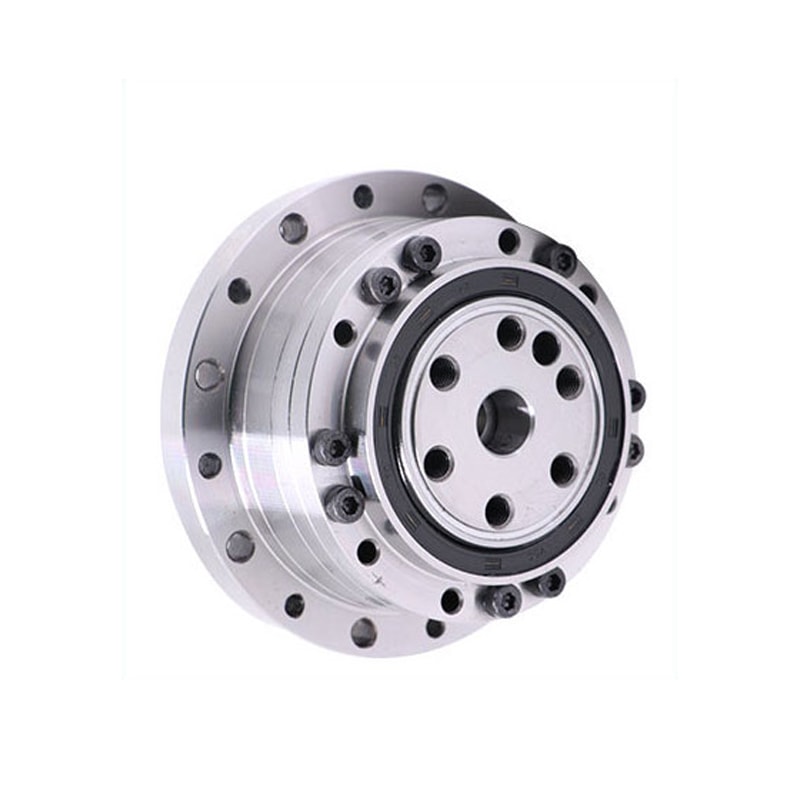
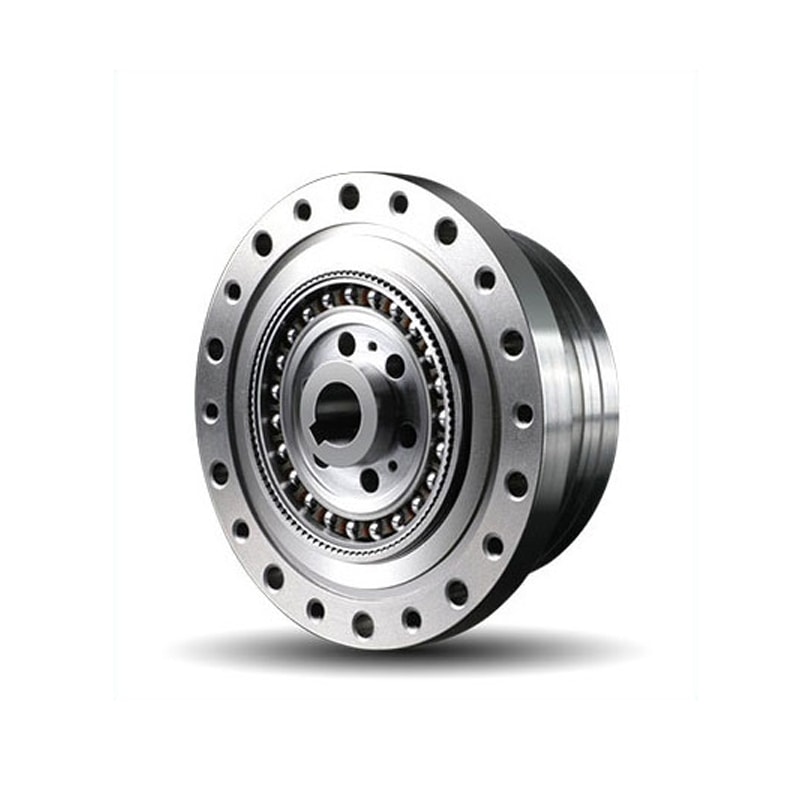
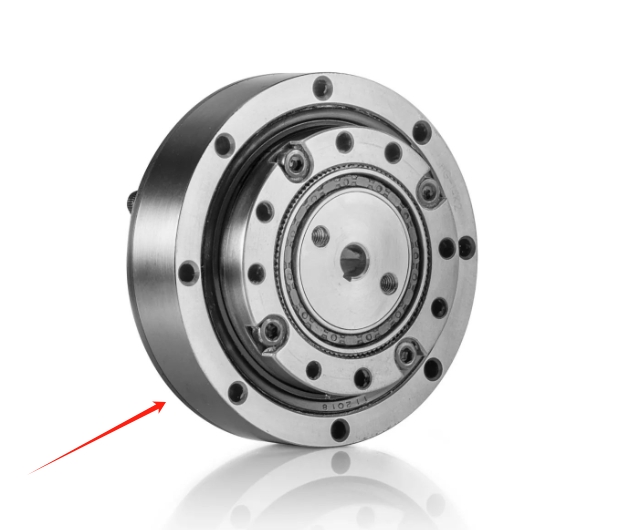
One of their latest achievements is the first QL-3500E high-rigidity impact-resistant precision reducer in China, which can meet the application in the fields of joints of large and heavy robots, bearing shafts of construction machinery, energy rotary drive and so on. The weight of the multi-joint industrial robot manipulator is easy to cause displacement errors and accumulated gaps in each connection part, which leads to the expansion of position deviation and affects the accuracy of the front-end unit of the manipulator. This small cycloidal pinwheel reducer solves a series of chain reactions caused by displacement and clearance. It combines "high torque that can realize smooth rotation even under heavy load" with "high precision due to small clearance between parts". The backlash is less than 1 arc minute, which can bear 5 times the rated torque, and the allowable torque can reach 2.5 times the rated torque when starting and stopping. At the same time, it realizes high torque, high rigidity and high precision. The launch of QL-3500E sets a new standard for performance and reliability in demanding industrial applications. It will play an important role in the fields of large and heavy robot joints, bearing shafts of construction machinery, energy rotary drive and so on, and drive the further development of intelligent manufacturing.

The Application Fields and Advantages of Planetary Gearboxes

 Planetary gearboxes are common transmission devices that have a wide range of applications and many advantages. They consist of a central gear (sun gear) and multiple external gears (planet gears) rotating around it.


1) Here are the main application fields and advantages of planetary gearboxes

  1.  Industrial Machinery: Planetary gearboxes are widely used in various industrial machinery such as machine tools, conveyors, mixers, and printing machines. They can provide high torque output and precise speed control, making them suitable for industrial applications that require high precision and stability.

  2.  Robotics: Planetary gearboxes play an important role in robotics. They can provide efficient power transmission and precise motion control, enabling robots to perform complex movements and accurate positioning, thereby improving production efficiency and accuracy.

  3.  tomotive Industry: Planetary gearboxes are widely used in transmission systems and engines in the automotive industry. They can provide high torque output and multi-gear speed control, giving vehicles better acceleration performance and fuel economy.

  4.  Aerospace: Planetary gearboxes also have significant applications in the aerospace field. They can provide efficient power transmission and precise speed control, suitable for various mechanical transmission systems of aircraft and spacecraft.

2) Planetary gearboxes have many advantages that make them an ideal choice in many applications

  1.  High Efficiency: Planetary gearboxes use multi-gear transmission, which has high transmission efficiency. They can effectively convert input power into output torque, reducing energy losses.

  2.  High Torque Density: The design of planetary gearboxes allows them to provide high torque output while maintaining a compact size. This enables them to provide greater output torque in limited space, meeting the requirements of various applications.

  3.  Precise Speed Control: Planetary gearboxes have multiple planet gears, which can provide precise speed ratios. By adjusting the combination of input and output gears, the desired speed ratio can be achieved to meet different speed control requirements.

  4. ​ High Reliability: Planetary gearboxes have a compact structure and a large contact area between gears, enabling them to withstand high loads. They have a longer service life and reliable performance, even in harsh working environments.

In conclusion, planetary gearboxes have a wide range of applications in various fields and have advantages such as high efficiency, high torque density, precise speed control, and high reliability. With the continuous advancement of technology, the design and performance of planetary gearboxes will be further improved, providing better transmission solutions for various applications.

Thursday, November 30, 2023

Common Types of Reducers Used in Industrial Robots

In industrial robotics, there are several commonly used types of reducers:

1. RV Reducer

The RV reducer mechanism is a novel transmission mechanism based on the traditional rotating planetary wheel pinion gear. It is widely applied in the joints of industrial robots due to its high efficiency. The power of the Servo engine in industrial robots is transmitted through gears on the input shaft of the reducer, resulting in a reduction in speed. The ratio of teeth and gears determines the percentage of transmission efficiency.

2. Harmonic Reducer

The harmonic reducer is a new transitional mechanism in the gear system and is typically used in industrial robots with minimal loads. It consists of elastic and rigid wheel gear generators, offering slightly higher utility than flexible wheel systems. The harmonic reducer exhibits significant driving advantages, such as compact size, fewer components, a single engine range of 50-4000%, and a transmission efficiency of 92-96%.

3. Planetary Reducer

In simple terms, the planets in the planetary reducer revolve around the sun, much like the planets in our solar system. The planetary reducer, also known as a planetary gear system, functions as a reducer to lower the rotational speed of the engine, thereby increasing torque in industrial robots.

The working principle of the planetary reducer involves reducing gears. When the sun rotates under the driving force, the engagement of the planetary wheels causes them to rotate. Simultaneously, the other side of the planetary wheels works together with the internal ring and circular gears on the inner wall of the housing, allowing the planetary wheels to rotate in the same direction as the driving frame along the sun wheel's rotation direction within the driving force. This creates a revolution motion of the internal ring and circular gears. The wheel revolving around the sun represents one revolution.​

 Industrial robots typically use RV reducers, harmonic reducers, and planetary reducers. RV reducers offer suitable speed control for Servo engines, reducing the speed to the desired level for each component of the industrial robot while increasing the generated torque.


Tuesday, November 28, 2023

How to Deal with Heating Issues in Harmonic Reducers

 The harmonic speed reducer plays an important role in the operation of mechanical equipment. Due to its small size, light weight, and high-precision reduction effect, it is widely used by many manufacturers of mechanical equipment.


As a reduction tool, the harmonic speed reducer is bound to encounter some problems after prolonged use, such as heating issues. Today, I'm going to share some knowledge about how to deal with the heating of harmonic speed reducers.
 
Generally, there are two main reasons for the heating of the speed reducer. One is related to problems with the eccentric bearings, and the other is related to lubricating oil. Of course, there are other issues as well, such as improper installation of new machines. These two are relatively common situations. Now, let's discuss how to identify and solve these problems.
 
When we notice that the harmonic speed reducer is heating up, we can start by checking the lubricating oil to see if the machine is running low on it. If there's insufficient or dried-up lubricating oil, we can add the appropriate amount.
 
If even after adding lubricating oil, the temperature of the harmonic speed reducer doesn't decrease, then it's not an issue with the lubricating oil. In that case, we need to continue troubleshooting. Next, we can look at the duration of machine operation, as prolonged continuous operation and overload can lead to heating, which is a normal occurrence. The solution to this problem is simple—just shut down the machine for a period of time.
 
Another aspect to consider is whether the installation of the harmonic speed reducer and the machine is appropriate. Inappropriate installation can also lead to heating issues. This problem is similar to the problem of eccentric bearings in the harmonic speed reducer and requires a certain level of technical expertise to identify. If you're not familiar with this, it's advisable to seek assistance from the speed reducer manufacturer for testing.
 
Once the problem is identified, solving it becomes straightforward. For those not well-versed in speed reducers, after checking the lubricating oil and prolonged operation, if the issue persists, seeking help from a professional harmonic speed reducer manufacturer would be beneficial for quickly resolving the problem and avoiding any potential major issues.

Micro Cycloid Reducers: The Key to Modern Industrial Precision

  In the fast-paced evolution of modern industry, precision and efficiency are paramount. Micro cycloid reducers have emerged as a critical ...